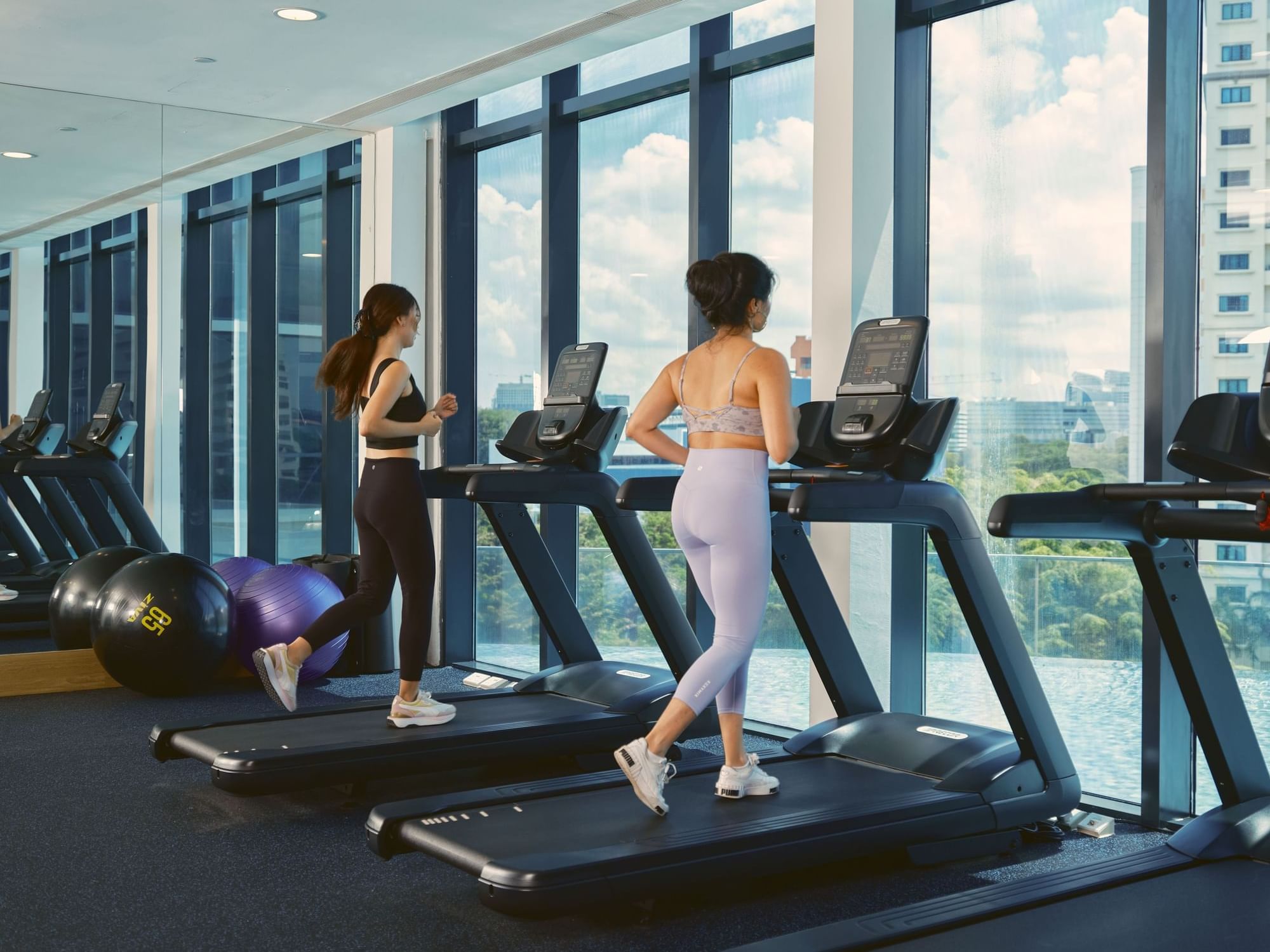
There is a particular type of traveller who approaches a trip to Singapore with their training schedule as non-negotiable. Not an aspiration, not a “if I get around to it,” but a structured part of the itinerary that sits alongside meetings, client dinners, and site visits. For these fitness-committed visitors, the question of where to train in Singapore has a clear answer that is increasingly not the hotel gym. The gym singapore environment offered by premium fitness facilities in the city represents a qualitatively different training experience that serious practitioners are choosing over hotel facilities with growing frequency.
This is not a minor distinction. Where a traveller trains shapes the quality of their workout, their recovery, and their capacity to perform at the professional level the rest of their schedule demands.
The Hotel Gym Problem
Hotel gyms in Singapore exist on a wide quality spectrum. The best of them, found in the city’s five-star properties, offer a reasonable selection of cardiovascular equipment, some free weights, and occasionally a small functional training area. But even these best-case hotel facilities pale in comparison to what a premium full-service gym in Singapore provides.
The most consistent shortcomings of hotel gym facilities include:
- Limited free weight selection, typically capped at 30 or 40 kilograms
- Absence of barbell stations or squat racks
- Single cardio machine options of each type, creating queuing problems during peak hours
- No group fitness programming
- No qualified coaching staff on the floor
- No recovery facilities beyond a basic sauna if present at all
- Acoustically and environmentally uninspiring spaces that reduce training motivation
For a traveller whose fitness level requires heavier loading, specific equipment types, or coached group sessions to maintain training quality, the hotel gym simply cannot provide an adequate stimulus.
What Premium Singapore Gyms Provide That Hotels Cannot
The contrast between a premium Singapore gym and a hotel facility is most apparent in three areas: equipment depth, coaching access, and programming variety.
Equipment Depth and Training Completeness
A full-service gym in Singapore provides access to complete free weight systems from the lightest dumbbells through to competition-grade barbells and plates, multiple power racks, cable systems, a full range of resistance machines, and cardiovascular equipment across every modality. For a traveller whose regular training programme requires specific equipment, this completeness means no compromise in training quality during time away from home.
This matters more than it might appear. Consistent training adapts to specific equipment parameters. A strength athlete whose programme requires deadlifting with a competition barbell at a specific load will produce a fundamentally different physiological stimulus from an alternative movement on hotel equipment. The closer the training environment replicates the athlete’s standard setup, the better the maintenance of existing adaptation during travel.
Group Fitness Access for Travellers Who Train in Community
Many fitness-committed travellers are not solo gym floor practitioners. They are group fitness regulars whose primary training modality is instructor-led classes. For these travellers, a hotel gym provides nothing of value. A premium Singapore gym with a full group fitness timetable allows them to drop into their preferred class format, whether cardio-based, strength-based, or mobility-focused, and train within a community context that replicates their home training environment more closely than any amount of solo cardio equipment can.
Recovery Facilities That Support High-Intensity Travel Schedules
The physiological demands of business travel are significant. Time zone disruption, extended sitting, irregular meal timing, elevated cortisol from schedule pressure, and sleep fragmentation all combine to compromise recovery capacity. A gym that provides access to recovery facilities including infrared sauna, stretching zones, or hydrotherapy creates a qualitatively different recovery experience from what a hotel room or basic hotel spa can provide.
Singapore’s Accessibility Advantage for Gym-Travelling Professionals
Singapore’s urban density and public transport quality make accessing premium gym facilities significantly more practical than in many major cities. A traveller staying in the central business district can reach multiple premium gym locations within a fifteen-minute travel window, making before-breakfast training or post-meeting sessions logistically viable in a way that dispersed gym networks in other cities cannot always match.
This accessibility factor removes the most common practical objection to choosing a city gym over the hotel facility: the time cost of travel. When the commute to a premium gym is ten to fifteen minutes from a central location, the return in training quality easily justifies the additional time investment for a traveller who values their fitness outcomes.
Day Pass and Visitor Membership Structures
Singapore’s premium gym sector has responded to the high volume of fitness-committed business and leisure travellers passing through the city by developing accessible day pass and short-term visitor membership options. These allow travellers to access full facility capabilities without the commitment of a long-term contract, which removes the financial and administrative barrier that historically discouraged city gym use during travel.
True Fitness Singapore offers visitor access structures that make high-quality training accessible for professionals passing through Singapore. True Fitness Singapore provides the full-facility training environment that fitness-committed travellers need to maintain their programmes during time in the city.
The Performance Case for Maintaining Training While Travelling
For serious fitness practitioners, the argument for maintaining training during travel is not simply about not losing progress. It is about the performance benefits that regular training provides for the professional activities that fill the rest of the travel schedule.
Regular exercise during business travel has been shown to improve jet lag recovery, maintain cognitive sharpness during the disorienting effects of time zone changes, regulate cortisol levels elevated by travel stress, and improve sleep quality in unfamiliar hotel room environments. The traveller who maintains their training schedule while in Singapore is not just preserving their fitness. They are actively supporting their professional performance capacity.
FAQs
How do I access a Singapore gym on a short business visit without a long-term contract? Most premium Singapore gyms offer day passes or trial access options for visitors. Contacting the facility directly before arrival to arrange access ensures a smooth experience without administrative delays on the day.
What should a travelling athlete prioritise when choosing between gym options in Singapore? Equipment availability for your specific training requirements, class timetable alignment with your schedule, and proximity to your accommodation or meeting locations are the three most practical prioritisation factors.
Is it worth maintaining full training intensity during heavy travel schedules? Not always. Travel disrupts recovery capacity, and maintaining full training volume at reduced recovery capacity increases injury risk. A maintenance phase approach, preserving training stimulus at reduced volume, is often more appropriate than attempting to replicate a full home training schedule during travel.
How do Singapore’s premium gym facilities compare to equivalents in other Asian financial centres? Singapore’s premium gym sector is consistently regarded as among the strongest in Asia in terms of facility quality, instructor certification standards, and programming sophistication, making it a genuinely high-quality training environment relative to regional alternatives.
Can gym training genuinely offset the health effects of extended business travel? Regular training during travel mitigates several of the most significant health impacts including cardiovascular deconditioning, metabolic disruption, and stress-related hormonal imbalance. It cannot fully offset the cumulative effects of chronic sleep disruption, but it represents the highest-impact single intervention available to the travelling professional.
